What Is SHAFT in SMS Marketing? A Practical SMS Compliance Guide for Shopify Brands
SMS is one of the highest-intent channels in ecommerce. It lands directly on the customer's phone. It gets seen fast. It works especially well for time-sensitive offers, abandoned cart reminders, VIP drops, back-in-stock alerts, and post-purchase updates.
But SMS also has stricter rules than email. One of the biggest compliance terms Shopify brands need to understand is SHAFT.
What Is SHAFT in SMS Marketing?
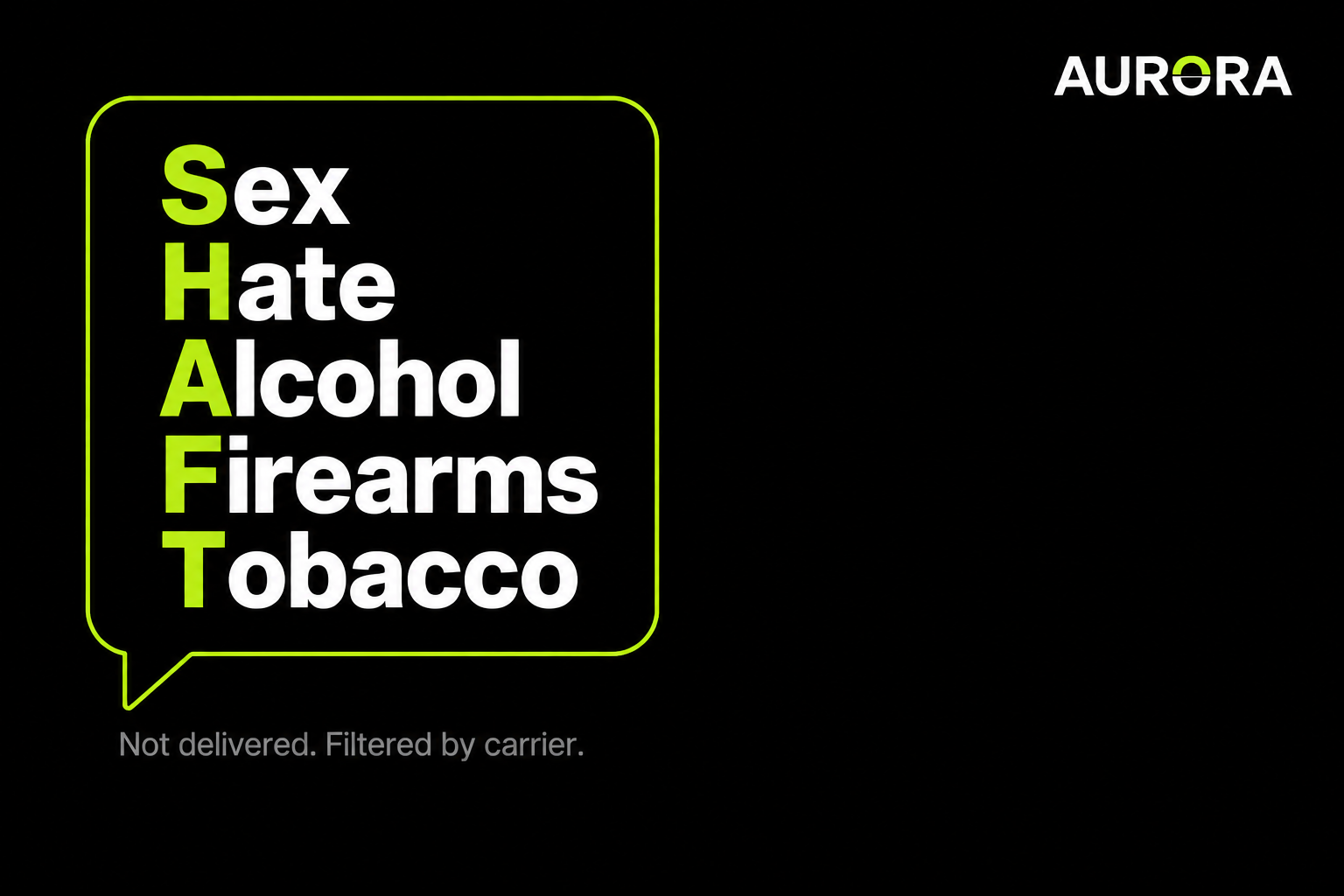
SHAFT stands for:
- S — Sex
- H — Hate
- A — Alcohol
- F — Firearms
- T — Tobacco
In SMS marketing, SHAFT refers to content categories that wireless carriers typically restrict, filter, or block. Klaviyo describes SHAFT as a mostly US acronym used across the SMS industry for prohibited content, with categories that carriers usually do not allow or only allow with specific safeguards.
For a Shopify brand, this matters because SMS compliance is not only about the message you write. Carriers may also care about your business category, your linked landing page, your opt-in method, your sending number, and whether your SMS program is properly verified.
What Is SHAFT in Marketing?
In broader marketing, SHAFT is a risk category. It helps platforms, carriers, and compliance teams identify sensitive or restricted promotional content before it reaches consumers.
For email, SHAFT-related content may still create deliverability, legal, or platform-policy issues depending on the market and platform. But for SMS and MMS, the risk is much higher because carriers actively filter messages to protect consumers from unwanted or restricted content.
That means a brand selling normal lifestyle products can usually use SMS without major SHAFT concerns. But brands in categories like wine, spirits, adult products, firearms, tobacco, vape, CBD, cannabis, or related accessories need to be much more careful.
Even one message with the wrong wording can cause filtering, failed sends, toll-free verification rejection, or a suspended sending number.
Why SHAFT SMS Marketing Gets Blocked
SMS carriers are strict because SMS is personal. People do not want their phones filled with unwanted, sensitive, misleading, or inappropriate messages. CTIA's messaging principles focus on maintaining trust in wireless messaging and protecting consumers from unwanted messages.
So when carriers review or filter SMS traffic, they look for risk signals such as:
- Restricted words or phrases
- Unclear sender identity
- Weak or missing opt-in language
- Links to restricted product pages
- Unverified toll-free numbers
- High complaint or opt-out rates
- Suspicious short links
- Misleading offer language
- Sending to people who did not clearly consent
Klaviyo's own SMS failure guidance recommends avoiding SHAFT-related words, using a human tone, and sending from a trusted number such as a verified toll-free number or short code.
SHAFT Categories Explained for Ecommerce Brands
Sex — Adult content, explicit sexual language, adult products, or links to adult-oriented pages. Even if the message is not graphic, the business category or landing page can still create issues. Some adult-related content may require age-gating depending on the country, number type, and platform requirements.
Hate — Hateful, abusive, discriminatory, violent, or extremist content. For normal ecommerce brands, this is usually not a product-category issue. The risk is more likely to come from offensive language, aggressive wording, or user-generated content that slips into campaigns.
Alcohol — Wine, beer, liquor, spirits, cocktails, alcohol bundles, alcohol discounts, and alcohol-related landing pages. Alcohol SMS is one of the most common SHAFT issues for ecommerce and DTC brands. Klaviyo says age-gating for alcohol is allowed in most countries where SMS is available, with exceptions, and lists different legal age requirements by country. For brands selling wine or spirits, email is often the safer primary promotional channel.
Firearms — Guns, ammunition, firearm accessories, firearm training, and related content. Klaviyo notes that firearm-related SMS content may be allowed with age-gating in limited cases, such as certain US and UK sending setups, but this is not a casual SMS category. For most brands, this requires specialist compliance review before sending.
Tobacco — Tobacco, vape, nicotine products, smoking products, and related accessories. Klaviyo notes that tobacco-related content may be allowed with SMS age-gating in the United States for specific setups, but this category is heavily restricted. Do not treat tobacco or vape SMS like normal ecommerce promotions.
Common SMS Carrier Violation Issues
A carrier violation happens when your message, sending number, business category, or consent process breaks carrier rules or appears risky. Common causes include:
- Using SHAFT-related words in SMS copy — Words related to alcohol, tobacco, firearms, adult products, CBD, cannabis, or similar restricted categories can trigger filtering.
- Linking to restricted landing pages — Even if the SMS copy is clean, the page you link to can create problems.
- Sending from an unverified number — In many countries, wireless carriers require sending numbers to be verified or registered so they can check whether the sender is trusted.
- Poor opt-in collection — Importing phone numbers without proper SMS consent is dangerous. Email consent and SMS consent are not the same.
- Missing opt-out path — Some sending number types can receive STOP replies; branded sender IDs cannot receive replies and use unsubscribe links instead.
- Sending too many generic blasts — SMS should feel useful, timely, and personal. Over-sending weak campaigns leads to more opt-outs and complaints.
How to Fix an SMS Carrier Violation Issue
If your Klaviyo SMS campaign is failing, filtered, rejected, or blocked, do not keep resending the same message. Use this process.
Step 1: Stop the campaign. Pause the campaign or flow message that triggered the issue. Do not duplicate it and resend immediately — that can make the problem worse.
Step 2: Check the message copy. Look for SHAFT-related language. Remove or rewrite terms connected to sex or adult content, hate or abusive language, alcohol, firearms, tobacco or vape, CBD or cannabis, gambling, high-risk finance, or medical claims. Even if the words are technically accurate, they may still create SMS filtering risk.
Step 3: Check the destination URL. Open the exact landing page linked from the SMS. Does the page mention restricted products? Does it need age-gating? Is the page clear, branded, and trustworthy? Are you using a suspicious-looking shortened link? If the linked page is the issue, rewriting the SMS copy alone will not solve it.
Step 4: Check your sending number. Make sure your SMS number is verified or registered. Klaviyo supports different sending number types, including toll-free numbers, branded sender IDs, long codes, and short codes. For US and Canada, Klaviyo says toll-free numbers are the default sending numbers, and toll-free numbers must be verified.
Step 5: Check consent. Confirm that subscribers gave clear SMS consent. A customer entering their phone number at checkout does not automatically mean they agreed to receive promotional SMS. Your form language, checkbox, disclosure, and privacy terms matter.
Step 6: Use age-gating when required. For restricted categories, age-gating may be required. Klaviyo explains that SMS age-gating requires users to enter their age or date of birth before accessing restricted content, and it must prevent underage visitors from viewing restricted content or subscribing to SMS.
Step 7: Contact platform support if needed. If the issue is tied to toll-free verification rejection, short code approval, or restricted category eligibility, contact Klaviyo support or your SMS provider before sending again. If an industry is completely prohibited, use other channels such as email or ads.
How to Get Klaviyo SMS Verified
For Shopify brands using Klaviyo, the basic setup is simple, but verification depends on your country and sending number type.
In Klaviyo, you can turn on SMS by going to Settings > SMS, clicking Set up SMS, selecting the countries where you want to send, and filling out your company information. Klaviyo may provide a toll-free number or branded sender ID depending on the country. Klaviyo lists toll-free numbers for the US and Canada, while branded sender IDs are used in many countries such as the UK, Germany, France, Spain, Italy, and Australia.
To improve approval chances, prepare:
- Legal business name
- Website URL
- Business address
- Support contact information
- Privacy policy
- Terms of service
- SMS opt-in language
- Example SMS messages
- Clear product category
- Age-gating process, if needed
- Proof that customers explicitly consent to SMS
SMS Number Verified for Shopify: What Brands Need to Know
Technically, your SMS number is not "verified by Shopify." Your Shopify store connects to Klaviyo. Klaviyo handles SMS sending, consent collection, number setup, and carrier registration or verification.
Shopify is where customers browse, buy, and often opt in. Klaviyo is where your SMS list, flows, campaigns, and sending number live. So when people say "SMS number verified for Shopify," they usually mean:
- Klaviyo SMS is connected to Shopify
- The brand has a valid SMS sending number
- The number is verified or registered where required
- SMS consent is collected properly on Shopify forms, checkout, or Klaviyo forms
- SMS campaigns and flows can send without carrier issues
For Shopify brands, the biggest mistake is treating SMS like email. Email opt-in is not enough. SMS needs its own consent process.
Best Practices for SMS Compliance
Here is a practical SMS compliance checklist for ecommerce brands.
- Collect clear SMS consent. Use clear opt-in language. Tell people what they are signing up for, who is texting them, and that message/data rates may apply where required.
- Keep email and SMS consent separate. Do not assume email subscribers are also SMS subscribers. They are different channels with different consent requirements.
- Use compliant forms. Your popup, footer form, checkout opt-in, and tap-to-text form should all use clear SMS language.
- Make opt-out easy. For numbers that can receive replies, STOP keywords are common. For branded sender IDs, unsubscribe links are used instead.
- Avoid SHAFT-related content unless approved. If your campaign touches sex, hate, alcohol, firearms, or tobacco, slow down. Check whether SMS is even allowed for your use case.
- Segment your SMS list. Use segments based on purchase behavior, product interest, VIP status, cart activity, engagement, location, and SMS signup source.
- Use SMS for urgency, not everything. Good use cases: limited-time offers, back-in-stock alerts, abandoned cart reminders, VIP early access, order updates, event reminders, high-intent product drops.
- Keep copy short and human. Write like a helpful brand texting a customer.
- Avoid risky links. Use branded links where possible. Avoid suspicious shorteners or messy URLs.
- Review campaigns before sending. Is this message compliant? Is the landing page compliant? Did this customer consent? Is this worth texting someone for?
SMS Compliance Is Not Just About Avoiding Fines
Most brands think compliance is only about legal risk. That is too narrow. SMS compliance affects deliverability, campaign approval, carrier trust, number reputation, customer experience, revenue, and long-term list health.
A non-compliant SMS program can quietly kill performance. Messages get filtered. Numbers get flagged. Customers unsubscribe. Campaigns stop sending. Revenue becomes unpredictable.
A compliant SMS system does the opposite. It builds trust with carriers and customers. That is how SMS becomes a scalable revenue channel instead of a risky discount tool.
Final Takeaway
SHAFT is one of the most important SMS compliance concepts for Shopify brands. It stands for Sex, Hate, Alcohol, Firearms, and Tobacco — categories that carriers may restrict, filter, or block.
If your brand sells normal ecommerce products, SHAFT is mostly a checklist item before sending campaigns. But if your brand sells alcohol, tobacco, vape, firearms, CBD, adult products, or anything close to a restricted category, SMS needs a much more careful strategy.
The safest approach is simple: get proper SMS consent, use a verified sending number, avoid SHAFT-related language unless approved, age-gate restricted products where required, keep opt-outs easy, and send useful messages to the right people.
AURORA helps Shopify and DTC brands build compliant, revenue-focused email and SMS systems inside Klaviyo — from SMS verification and opt-in forms to abandoned cart flows, campaign strategy, and compliance cleanup. Book a Free Klaviyo Audit →
See the full SMS strategy playbook for Shopify brands. Klaviyo SMS Marketing Guide →
Frequently Asked Questions
What is SHAFT in SMS marketing?
SHAFT stands for Sex, Hate, Alcohol, Firearms, and Tobacco. These are restricted SMS content categories that carriers may block, filter, or only allow with strict safeguards.
What is SHAFT in marketing?
In marketing, SHAFT refers to sensitive or restricted content categories that require extra compliance review, especially in SMS and MMS marketing.
Can Shopify brands send SHAFT-related SMS campaigns?
Sometimes, but it depends on the category, country, sending number, platform, and age-gating setup. Some content may be fully prohibited. Other content may require age-gating or short code approval.
How do I fix an SMS carrier violation?
Pause the message, review the copy, check the landing page, remove restricted language, verify your sending number, confirm SMS consent, and contact your SMS platform if the issue relates to verification or restricted-category eligibility.
How do I get Klaviyo SMS verified?
Go to Klaviyo SMS settings, choose your sending countries, complete your company information, prepare compliant opt-in language and example messages, and submit the required information for number verification or registration.
Is SMS number verification done in Shopify or Klaviyo?
For Shopify brands using Klaviyo, the SMS number is managed and verified through Klaviyo. Shopify provides the store and customer data connection, while Klaviyo handles SMS sending, consent, flows, campaigns, and number verification.
What are the best practices for SMS compliance?
Collect clear SMS consent, separate email and SMS opt-ins, use verified sending numbers, make opt-out easy, avoid SHAFT-related content unless approved, segment your list, use compliant forms, and review every campaign before sending.